IFRS vs. GAAP: 5 Key Differences Every Global Accountant Must Know in 2026
Discover the 5 critical differences between IFRS and GAAP in 2026. A must-read guide for accountants, students, and global businesses in Ethiopia and abroad.

IFRS vs. GAAP: 5 Key Differences Every Global Accountant Must Know in 2026
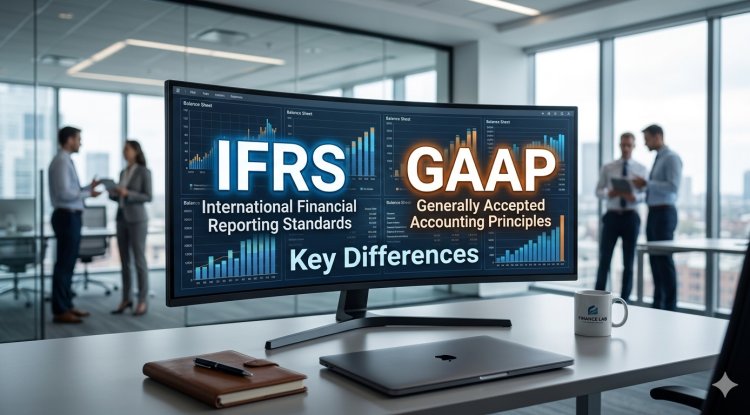
In the world of global finance, two languages dominate: IFRS (International Financial Reporting Standards) and GAAP (Generally Accepted Accounting Principles). As Ethiopia continues its transition to IFRS and global markets become more integrated, understanding the friction between these two systems is no longer optional—it is a requirement for every professional accountant.
While both systems aim to provide transparency and consistency, they approach financial reporting with different philosophies. Here are the 5 critical differences you must master in 2026.
1. Conceptual Framework: Rules-Based vs. Principles-Based
The most fundamental difference is the "Philosophy" of the reporting.
-
GAAP (Rules-Based): Used primarily in the United States, GAAP is rigid and full of specific rules for every scenario. It is designed to minimize professional judgment to prevent manipulation.
-
IFRS (Principles-Based): Used in over 140 countries, including Ethiopia's modern framework. IFRS provides general guidelines and requires the accountant to use professional judgment to reflect the "substance" of a transaction.
Pro Tip: If you are practicing in Ethiopia, the Accounting and Auditing Board of Ethiopia (AABE) requires adherence to the principles-based IFRS.
2. Inventory Valuation: The Death of LIFO
Inventory is often the largest asset on a balance sheet. However, the way you value it changes depending on the standard.
-
GAAP: Allows the use of LIFO (Last-In, First-Out), which can be beneficial for tax purposes during inflation.
-
IFRS: Strictly prohibits LIFO. Only FIFO (First-In, First-Out) or Weighted Average Cost methods are allowed.
3. Revaluation of Assets (Fixed Assets)
How much is your building or machinery worth today?
-
GAAP: Assets must be reported at Historical Cost (what you paid minus depreciation). You cannot "mark up" the value if the property price goes up.
-
IFRS: Allows for the Revaluation Model. If the fair market value of an asset increases, you can report that increase on your balance sheet, providing a more "real-time" view of company wealth.
4. Treatment of Development Costs
For tech startups and manufacturing firms, this is a massive distinction:
-
GAAP: Treats almost all Research and Development (R&D) as an expense. It hits your profit and loss statement immediately.
-
IFRS: Allows you to capitalize development costs if certain criteria are met. This means the costs are treated as an asset, spreading the impact over several years.
5. Revenue Recognition Philosophy
While the "converged" standard (IFRS 15 / ASC 606) has brought them closer, the application still differs.
-
GAAP: Focuses on the transfer of risks and rewards.
-
IFRS: Focuses on the transfer of control to the customer.
Comparison Summary Table
| Feature | IFRS (Global/Ethiopia) | GAAP (USA) |
| Approach | Principles-Based | Rules-Based |
| LIFO Inventory | Prohibited | Permitted |
| Asset Revaluation | Allowed | Not Allowed |
| R&D Costs | Capitalization possible | Mostly Expensed |
Conclusion: Why This Matters for 2026
As an Ethiopian accountant or business owner, mastering these differences allows you to work with international investors and Diaspora partners who may be used to the US GAAP system. Transitioning your records to IFRS is the first step toward Financial Literacy and global expansion.